
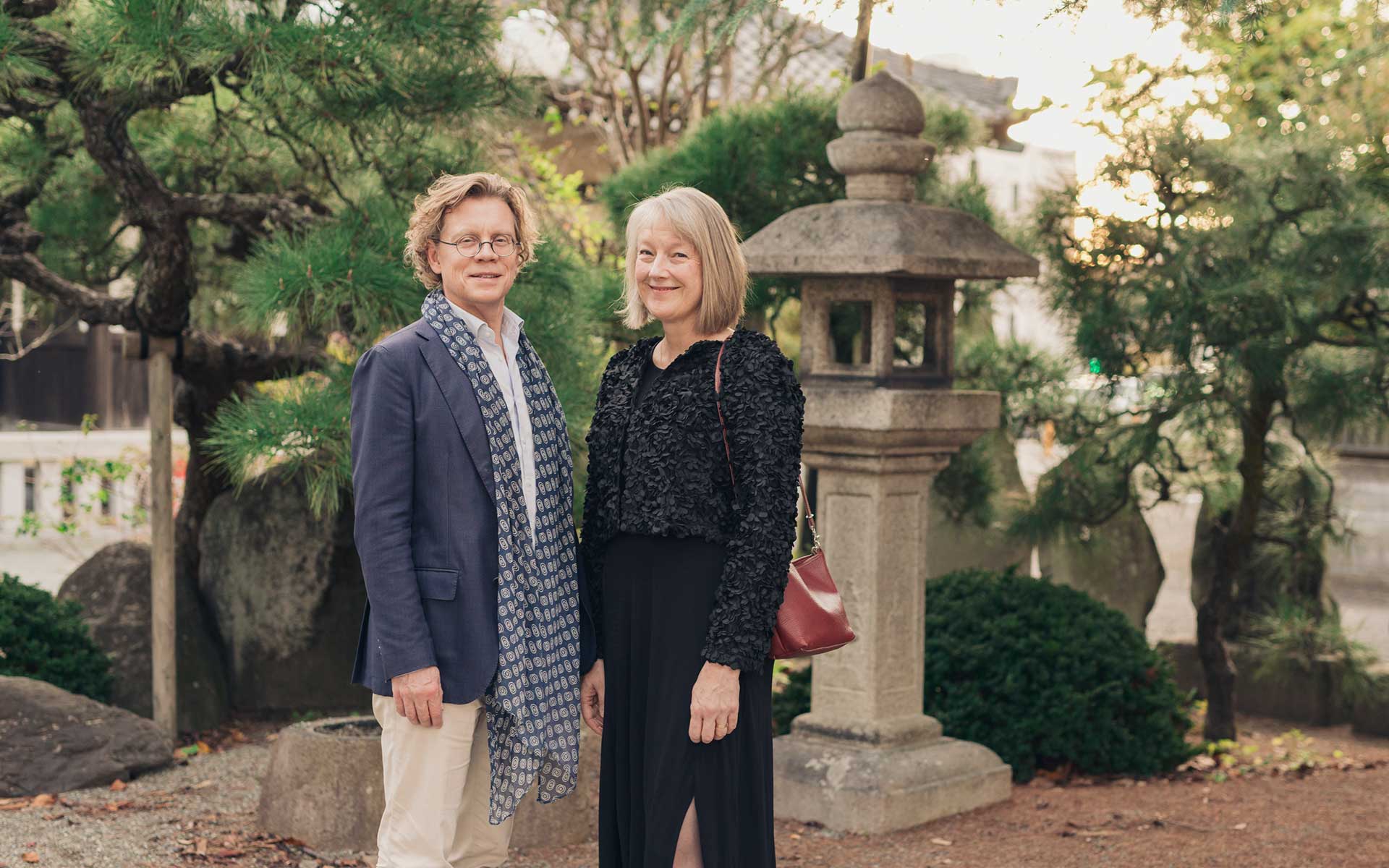
ANAスウェーデン便就航から約1年 元駐日大使夫妻が語る日本文化の魅力
share


▶︎ Japan Through Swedish Eyes: One Year After ANA’s New Route
東京とスウェーデンのストックホルムを直行でつなぐ路線をANAが運航開始してから、もうすぐ1年。ANAは今後も国際線の強化に努め、日本をさらに多くの人に開かれた国へと押し上げていく見通しだ。
北欧は日本人にとって人気が高い訪問先として知られているが、その逆もまた然り。北欧から日本を訪れる人の数も年々増加の傾向を見せている。2025年1月末に日本とスウェーデンを結ぶ唯一の直行便が就航し、その動きに拍車がかかっている模様だ。
スウェーデン元駐日大使のペールエリック・ヘーグベリさんと、ジャズシンガーとして活躍するアンナ・ヘーグベリさん夫妻も、その利便性をおおいに実感しているという。ペールエリックさんの駐日大使時代には5年間日本に在住し、今なおアンナさんのジャズライブ出演の仕事などのため来日を重ねる二人に、日本の印象深い特色について聞いた。
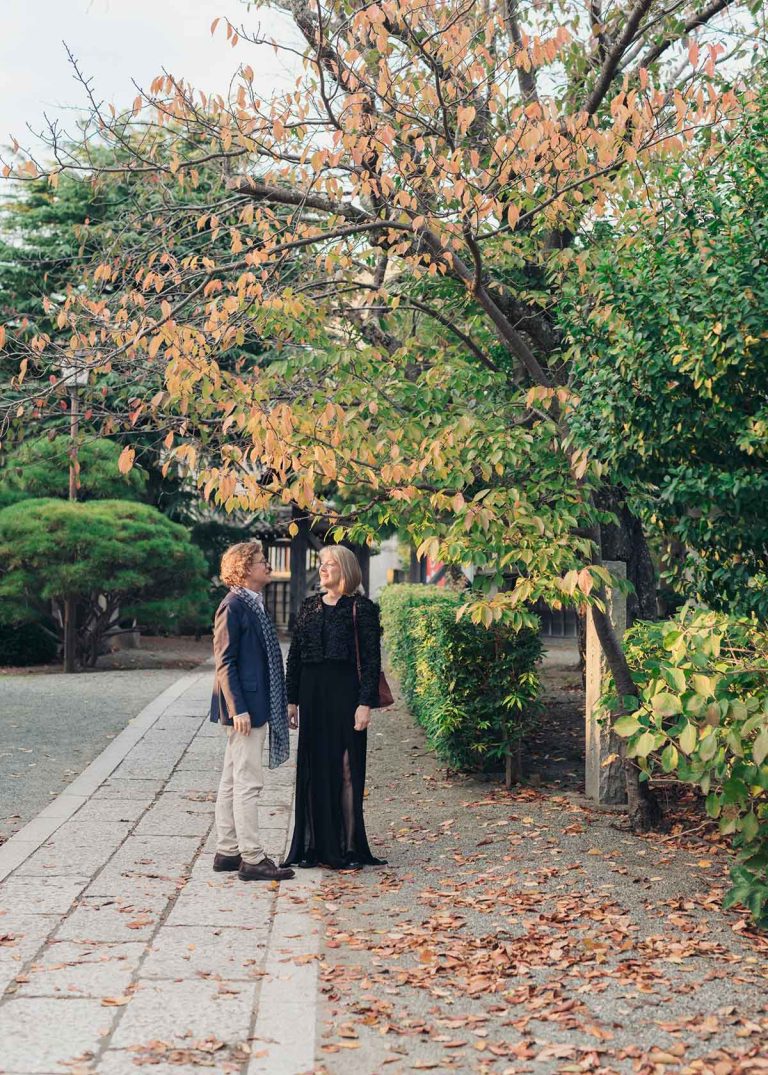
調和がとれた社会や美意識 日本には恋しいものがいっぱい
──ストックホルム便が就航し、来日の時間はどのように変化しましたか。
アンナさん(以下A):とにかく本当に便利。直行便ができてとてもうれしいです。羽田に発着するので、空港が都心から近いのも重宝するポイントですね。
ペールエリックさん(以下P):以前はロンドンやフランクフルト経由で、長いフライトのあとさらに乗り継ぎ便を待たなければならなかった。それがなくなり、家から日本まですぐにアクセスできるようになったのは大きな利点です。私の政府もスウェーデン企業も、この直行便を強く望んでいました。両国の関係をこれまで以上に深め、交流を促進してくれる非常に大きな一歩だと感じています。
A:実は私が幼かった頃、父がよく日本で仕事をしていたんです。スウェーデン企業に勤務していましたが、日本でビジネスをしていて出張に出かけていました。いつも日本のお土産を持って帰ってきてくれ、“一緒についていってみたい”と思っていたのがこの国へ興味を持ったきっかけ。そんな願いが叶いやすくなったのは、すばらしいことですよね。
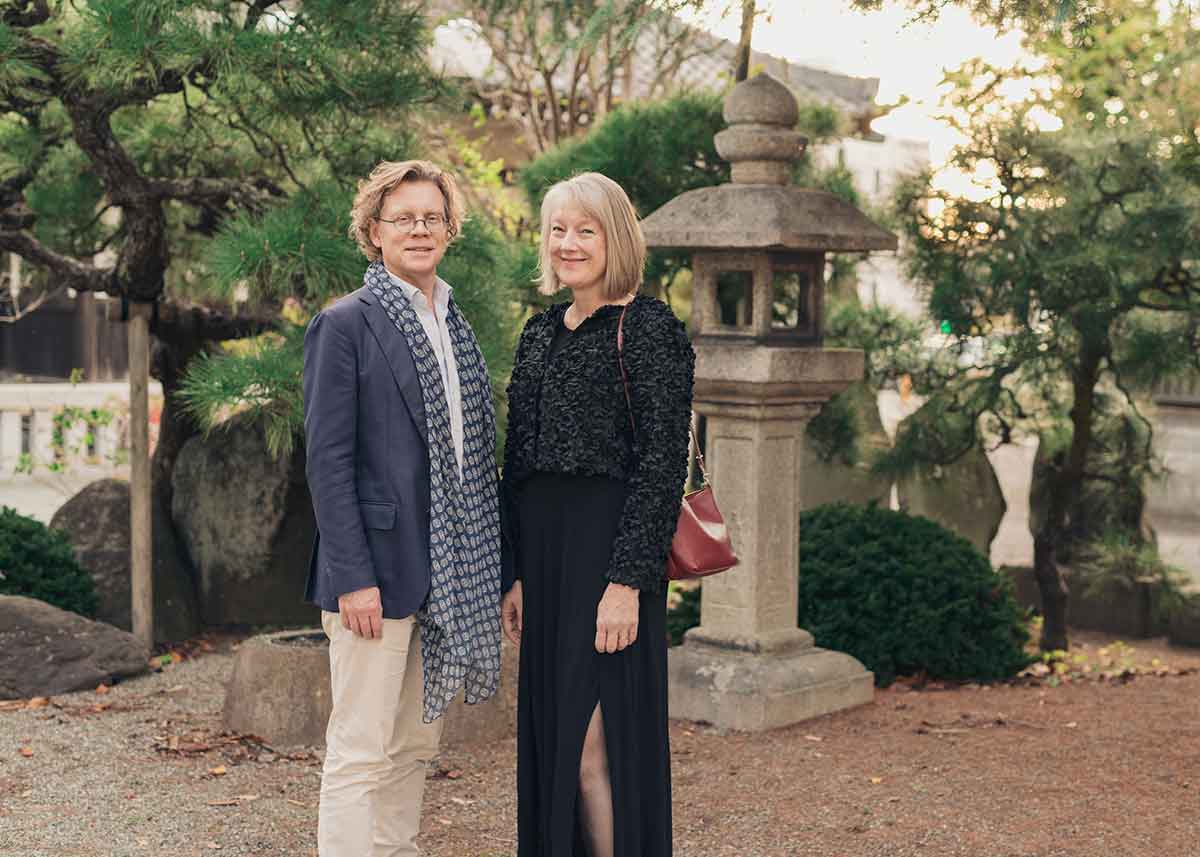
──日本に来てみて、最も印象に残った文化的特徴とは?
A:まずはやはり食べもの。それから、日本の人々の礼儀正しさや独特のふるまい方ですね。私にとって日本は“調和”の国。これまで祖国に加えアフリカやベトナムなどいろいろな国に住んだことがありますが、そのどことも異なり、日本の社会は非常に調和が取れていると感じます。みんなが互いに快適であるように尊重しあおうとする姿勢が、とても素敵です。
P:駐在中は日本語も少し覚えましたし、スウェーデンに帰国した当初はいかに自分が日本人っぽくなっているかに驚かされることが多々ありました。食事の前に「いただきます」と挨拶をするほか、赤信号をきちんと守って、道路を渡るとか(笑)。ちょっとした所作の美しさに気づくようになったとも思います。
A:美意識も素敵ですよね。欠けた陶磁器を漆で接着して金属粉で装飾する金継ぎのように、壊れたものを捨てず、手をかけてさらに価値を高める文化が日本にはある。浮世絵も本当に美しくて大好きです。そして、日本を離れていちばん恋しいのは……温泉です。日本にいた頃はすっかり“温泉ハンター”になって、日本中をめぐりました。
P:秋田県から白神山地を訪れたときは、長い週末休みを取って何ヵ所も温泉をめぐり、帰りは新幹線からそのまま職場に向かったこともありました。体から温泉の香りがしていたらしく、秘書に「大使、いったいどこに行ってたんですか?」と聞かれたことも。
A:スウェーデンにはサウナ文化があるので、みんなと裸でお風呂に入ること自体に大きな抵抗はなかったです。サウナは長く入っていると頭まで熱くなってしまうけれど、温泉は熱いお湯に浸かっても頭がスッキリしていて、とっても快適ですよね。
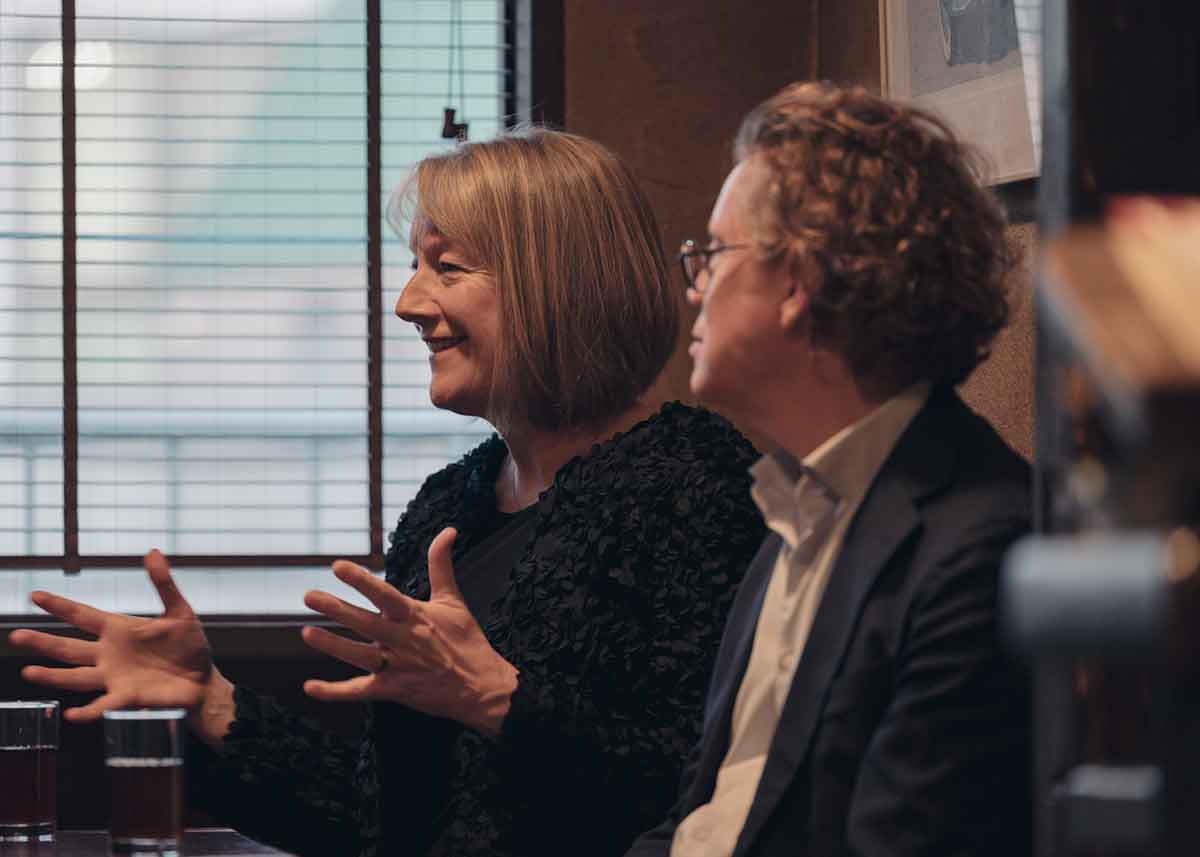
ジャズや伝統音楽……ハーモニーが繋ぐ音楽での両国交流に期待
──海外から日本を訪れる人にぜひ体験してほしいと思うのはどんなことですか?
A:大都市ももちろんすばらしいですが、日本は地方にもたくさん魅力があります。私たちが日本に住んでいた期間はちょうどコロナのパンデミックと重なったので、自粛明けのタイミングで国内旅行に行く機会がたくさんありました。広島や長崎にも行ったし、先ほど夫が話したように秋田にも。最も好きな都市は、岐阜の飛驒高山です。私たちのファミリーネームはスウェーデン語で「高い山」という意味なので、“高山には行かなきゃ”と思って。最初は友人と訪れましたが、大自然の美しい景色がとても気に入って数年後に夫と再訪したんですよ。
──日本とスウェーデンとの共通点は、どんなところにあると感じますか?
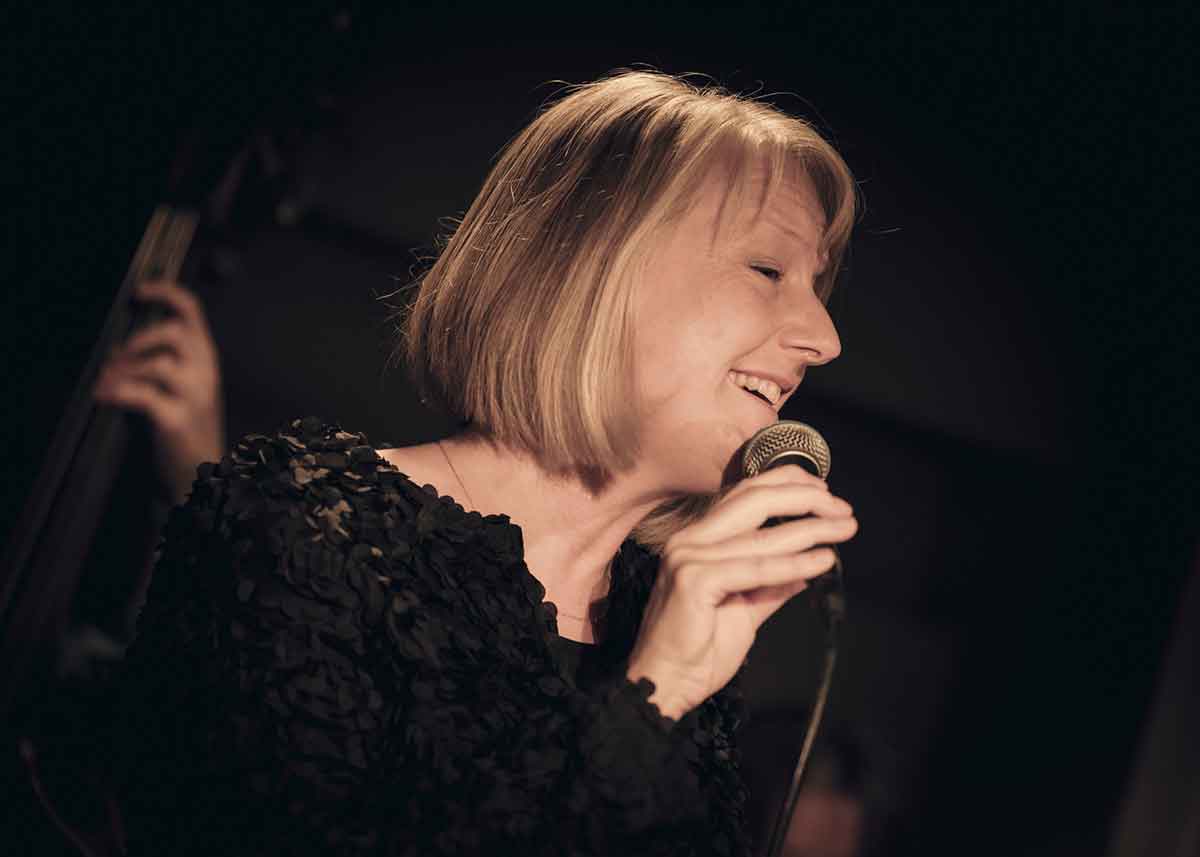
A:先ほどのサウナと温泉のような入浴文化はわかりやすい共通点ですが、音楽においても似たところがあると思いますね。私はジャズシンガーとして活動し両国を行き来しているけれど、日本ではレストランやバー、ショップなど、ライブ以外にもジャズが流れるいろんな場所があって、人々に親しまれているんだなと感じています。東京には、小さくてもマスターが何千枚もレコードを所有しているようなすばらしいジャズバーもたくさんありますしね。
P:スウェーデンにはジャズミュージシャンがたくさんいるものの、ここまで街中に浸透している感じはしないんですよ。
A:日本の伝統音楽も興味深い。友人の一人に長唄の演奏者がいて、少し教えてもらったことがあります。音符ではなく長唄と三味線の記譜法を覚えなければならないので、かなり難しかったけれど。スウェーデンにも同じく伝統音楽があるんですよ。短調の、少し哀愁がある曲調のものが多いです。日本で歌うと、言葉がわからなくても日本の人がとても楽しんでくれるのを感じます。ハーモニーが心に響くのかもしれませんね。
──今後、日本とスウェーデンにどんな交流を深めていってほしいとお考えになりますか?
P:そうですね。両国の関係はもう150年以上続いていて、19世紀後半にはすでにスウェーデンの企業が日本に来ていました。そうした長い国交の歴史を大切にしながら、製品の販売だけでなく研究に開発、イノベーションなど、幅広い分野で協力が進むとよいなと思います。
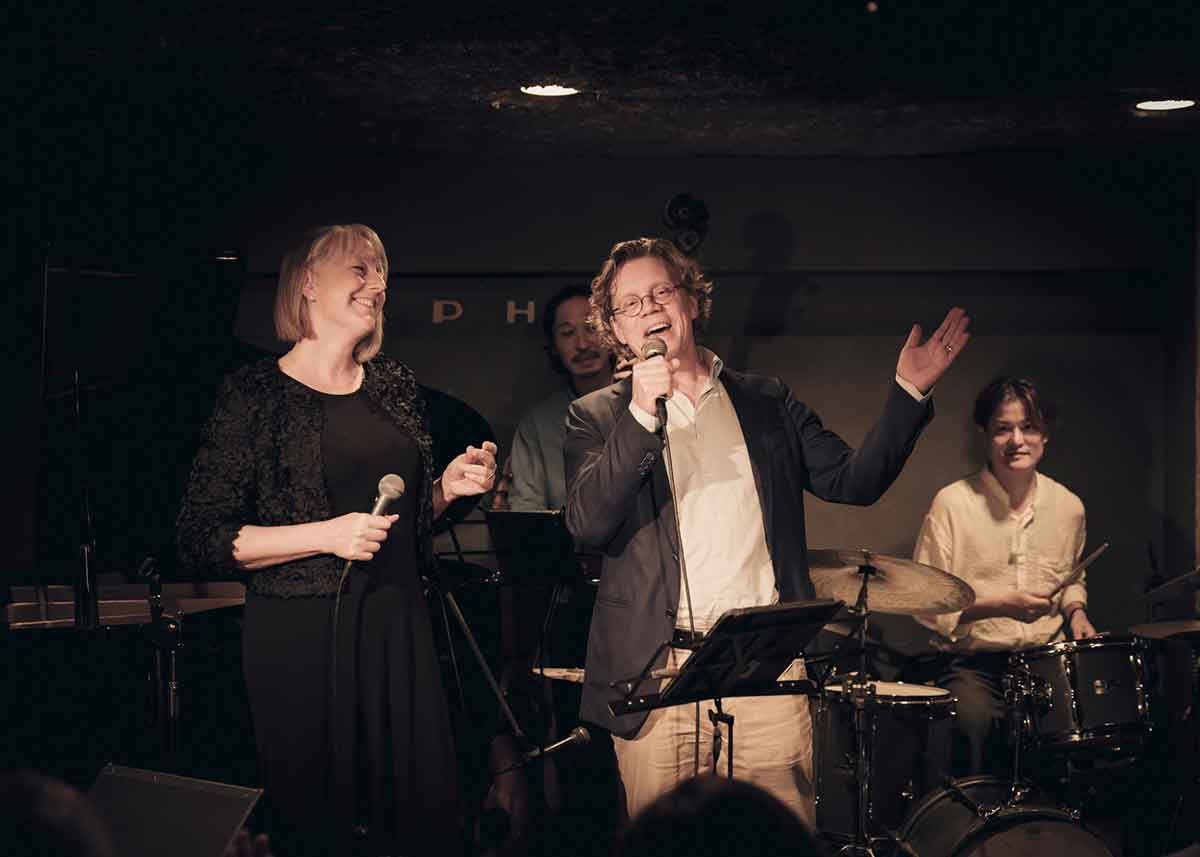
A:私は、音楽分野での協力がもっと増えてくれたらうれしい。クラシックはもちろん合唱やジャズ、ヘビーメタルに至るまで、お互いに学べることがたくさんありますから。スウェーデンのミュージシャンは数多く日本を訪れていますし、2025年はスウェーデン放送合唱団や、御年98歳になる著名な指揮者のヘルベルト・ブロムシュテットさんも来日公演を成功させました。ジャズの交流も、もっと活発にできるはず。個人的には特に、日本のジャズをスウェーデンで紹介してみたいですね。
写真 嶋崎征弘
取材・文 山下美咲
翼の王国のアンケートにぜひご協力ください。
抽選で当選した方にプレゼントを差し上げます。
Japan Through Swedish Eyes: One Year After ANA’s New Route
It has been nearly a year since ANA launched its direct service between Tokyo and Stockholm, Sweden. As ANA continues to strengthen its international network, the airline is expected to help make Japan an even more accessible destination for travelers around the world.
Scandinavia has long been a popular destination for Japanese travelers—and the reverse is also true. The number of visitors from Nordic countries to Japan has been steadily rising. With the launch of the only direct flight between Japan and Sweden at the end of January 2025, that trend appears to be accelerating.
Swedish jazz singer Anna Högberg and her husband, Pereric Högberg, former Swedish Ambassador to Japan, say they have fully felt the convenience of the new route. Having lived in Japan for five years during Pereric’s term as ambassador, and continuing to visit regularly for Anna’s live jazz performances, the couple shared their impressions of what makes Japan so distinctive.
Japan’s Unique Magic: A Culture of Harmony and Subtle Beauty
—How has the new Stockholm route changed your travel to Japan?
Anna(A): It’s simply incredibly convenient. I’m so happy we now have a direct flight. And with the service flying to and from Haneda, the airport’s proximity to central Tokyo is another major advantage.
Pereric(P): Before this, we had to fly through London or Frankfurt, take a long-haul flight, and then wait for a connecting flight. Eliminating that has been a huge benefit—now we can get from our home to Japan so easily. Both the Swedish government and Swedish companies had long hoped for this direct service. I believe it’s a significant step forward that will deepen relations and encourage greater exchange between our two countries.
A: Actually, when I was little, my father often came to Japan for business. He worked for a Swedish company but frequently traveled to Japan. He always brought back souvenirs, and I remember thinking how much I wanted to visit someday. This new route makes fulfilling such wishes much easier—what a wonderful thing.
—What cultural aspects of Japan have left the strongest impression on you?
A: First, the food, and then the politeness and unique manners of the Japanese people. To me, Japan is truly a country of harmony. I’ve lived not only in Sweden, but also in Namibia, South Africa and Vietnam, and Japan’s society feels unlike any other. There is a beautiful attitude of mutual respect, where people try to ensure everyone feels comfortable.
P: During my tenure, I learned a bit of Japanese, and after returning home, I realized how much I had become “Japanese” in certain habits. Saying “itadakimasu” before meals or waiting for the light to turn green before crossing the street—things like that. I also feel I’ve become more aware of the beauty in small gestures.
A: I also love Japan’s aesthetic sensibility. Take kintsugi, the practice of mending broken ceramics with lacquer and gold powder—rather than discarding something broken, Japan has a culture of repairing it lovingly and elevating its value. Ukiyo-e is also extraordinarily beautiful, and one of my favorites. And what I miss most after leaving Japan is… hot springs. When we lived here, I became a complete “onsen hunter,” traveling all over the country.
P: Once, after visiting the Shirakami Mountains in Akita Prefecture, we spent a long weekend hopping between several hot springs. I even went straight from the Shinkansen to the office. Apparently it was obvious where I had been, because my secretary said – “Ambassador, you smell like onsen!”
A: Sweden has a strong sauna culture, so being naked with others in a bath wasn’t difficult for me. But with saunas, if you stay too long, your head feels hot, while with onsen, even though the water is hot, your head stays clear. It’s incredibly comfortable.
Two Cultures, One Rhythm: How Music Bridges Japan and Sweden
—What experiences would you recommend to visitors coming to Japan from abroad?
A: The big cities are wonderful, of course, but Japan’s regional areas have so much charm. When we lived here, it was during the COVID-19 pandemic, so once restrictions eased, we had many opportunities to travel domestically. We went to Hiroshima and Nagasaki, and—as my husband mentioned—to Akita. My favorite city is Hida-Takayama in Gifu. Our family name in Swedish means “high mountain,” so I felt we simply had to visit Takayama, which literally means the same thing in Japanese. I first went with a friend and loved its natural beauty so much that I returned a few years later with my husband.
—Where do you see similarities between Japan and Sweden?
A: The bathing culture—saunas and onsen—is an obvious one, but I think music is another. I travel often between the two countries as a jazz singer, and in Japan I find jazz everywhere: restaurants, bars, shops—not just at live venues. People truly enjoy it. Tokyo has many small but remarkable jazz bars, with owners who have thousands of records.
P: There are many jazz musicians in Sweden, but jazz does not permeate everyday urban life the way it does in Japan.
A: I’m also fascinated by Japanese traditional music. One of my friends plays nagauta, a type of traditional Japanese music, and she taught me a bit. It was quite difficult because you have to learn the notation for nagauta and shamisen rather than Western musical notes. Sweden also has its own traditional music—many pieces are in minor keys and have a touch of melancholy. When I sing them in Japan, people enjoy them even if they don’t understand the words. Perhaps the harmonies resonate emotionally.
—What kind of future exchange would you like to see between Japan and Sweden?
P: The relationship between our two countries goes back more than 150 years. By the late 19th century, Swedish companies were already active in Japan. While honoring that long-standing relationship, I hope cooperation continues to expand—not only in product sales but in research, development, and innovation across many fields.
A: I would love to see more collaboration in music. From classical and choral works to jazz and even heavy metal, there is so much we can learn from each other. Many Swedish musicians visit Japan, and in 2025 the Swedish Radio Choir and the renowned 98-year-old conductor Herbert Blomstedt successfully toured here. Jazz exchange could absolutely grow even further. Personally, I’d especially love to introduce Japanese jazz to audiences in Sweden.
Photography Masahiro Shimazaki
Interview & Text Misaki Yamashita
全日空瑞典航线开通近1年 分享你的日本体验
自全日空开通东京到瑞典斯德哥尔摩的直飞航线已经过去1年。北欧作为日本人热门的旅游胜地,已经广为人知。反之亦然,从北欧前往日本旅游的人数也呈现出逐年增加的趋势。
瑞典籍的爵士歌手Anna Högberg与曾任瑞典驻日大使的Pereric Högberg夫妇对此航线的便捷性深有感触。两人曾在日本居住长达5年,至今仍然经常访日。我们就日本的特色对他们进行采访。
──斯德哥尔摩航线开通之后,来日本的耗时发生了怎样的变化?
Anna(以下简称A):总之就是非常便利。有了直飞航线之后我非常开心。因为航班是从羽田机场出发,机场离市中心很近,这点也很方便。
Pereric(以下简称P):以前还要经过伦敦或法兰克福,在长途飞行之后还必须要等待中转航班。现在没有这些问题,可以从家门口直接前往日本,这是很大的优势。
──来到日本之后,你们印象最深刻的文化特征是什么?
A:首先是食物。其次是日本人的彬彬有礼和独特的行为举止。我感觉日本的社会非常和谐。互相尊重彼此的态度也非常棒。
P:在驻日期间我也学了一点日语。刚回瑞典的时候,我甚至惊讶地发现,自己已经变得很像日本人了。除了在吃饭前说“我开动了”之外,还会好好遵守红绿灯(笑)。我感觉自己也在注意到一些细微举止的美感。
A:还有更重要的,就是温泉。在日本居住期间,我已经完全成了“温泉猎人”,环游了日本各地。
P:从秋田县前往白神山地的时候,我们利用长周末假期泡了好几处温泉。回程就直接坐新干线去上班了。
A:瑞典有桑拿文化,所以我们对和大家一起裸浴并不会很抵触。桑拿蒸久了就会热得头昏脑涨,但是即使泡在热温泉里头脑也很清醒,感觉非常舒适。
──你们觉得从海外来日本的游客一定要体验的是什么?
A:大城市固然很棒,但日本的小地方也很有魅力。除了秋田之外,我们还去了广岛、长崎等地方。我最喜欢的城市是岐阜的飞驒高山。我们的姓氏在瑞典语中就是“高山”的意思,所以我就有了“一定要去高山”的想法。一开始是和朋友一起去的,但我真的太喜欢那边美丽的自然风光了,所以几年后又和丈夫重游了一次。
──你们觉得今后日本和瑞典应该在哪些方面加深交流?
P:两国交流的历史已经超过150年了。我希望能在珍惜这长期建交历史的同时,在商品销售、产品研发以及创新等广泛领域持续推进合作。
A:以桑拿和温泉这样的洗浴文化为代表,我们的文化其实有很多相似之处。在音乐方面,我感觉日本的街头到处都播放着爵士乐,深受人们喜爱,所以我希望能在音乐领域有越来越多的合作。许多来自瑞典的音乐家到访日本,去年瑞典广播合唱团,还有98岁高龄的著名指挥家Herbert Blomstedt也来到日本演出。爵士乐的交流也应当可以更加活跃。我个人非常希望能将日本的爵士乐介绍到瑞典。
摄影 嶋崎征弘
采访、撰稿 山下美咲